Brisbane’s subtropical climate presents unique challenges for property owners seeking year-round comfort. With sweltering summers that regularly push temperatures beyond 30 degrees and humidity levels that can make even mild days feel oppressive, air conditioning isn’t merely a luxury—it’s essential infrastructure for homes and businesses across the region. Yet the decision between split system and ducted air conditioning continues to perplex many Brisbane residents, often leading to costly mistakes that persist for decades.
Understanding which cooling solution aligns with your property’s architecture, your budget constraints, and your long-term comfort needs requires more than browsing specifications online. It demands insight into how different systems perform under Brisbane’s specific climatic conditions, how installation approaches vary across Queenslander homes versus modern builds, and what ongoing costs truly look like when your air conditioner runs six months of the year.
Why Brisbane’s Climate Demands Strategic Air Conditioning Choices
The River City’s weather patterns create a demanding environment for cooling systems. Unlike southern capitals where air conditioning might run intermittently, Brisbane properties often require consistent climate control from October through March—and increasingly, well beyond these traditional boundaries as summer extends its reach. This prolonged operational period amplifies every efficiency gap, every sizing miscalculation, and every installation shortcut.
Brisbane’s elevated humidity compounds the challenge. An air conditioning system that excels in dry heat may struggle to manage the moisture-laden air that characterises Brisbane summers. When humidity remains high, occupants feel uncomfortable even at temperatures that would seem reasonable on paper. This means effective air conditioning in Brisbane must address both temperature and humidity simultaneously—a dual mandate that influences system selection and sizing calculations.
The city’s architectural diversity further complicates decision-making. Traditional Queenslander homes with their elevated designs, timber construction, and ventilation-focused layouts present vastly different cooling challenges than contemporary brick and concrete structures. A split system installation that works brilliantly in a modern apartment might prove inadequate in a character home with high ceilings and multiple disconnected living spaces.
Split System Air Conditioning: Targeted Comfort and Flexibility
Split system air conditioning has evolved considerably from the basic wall-mounted units that once defined the category. Modern split systems deliver impressive cooling capacity while operating quietly and efficiently, making them the preferred choice for many Brisbane households approaching air conditioning installation strategically rather than attempting to cool entire properties simultaneously.
The fundamental architecture of split systems—an outdoor compressor unit connected to one or more indoor air handlers—provides inherent advantages for Brisbane properties. Individual room control means you’re not cooling unoccupied spaces, a critical consideration when energy costs continue rising. For families where bedrooms see evening use while living areas remain active during afternoons, split systems allow targeted cooling that aligns with actual occupancy patterns.
Installation flexibility represents another compelling advantage, particularly for existing Brisbane homes where retrofitting ducted systems would require extensive ceiling work. JM Air & Refrigeration regularly installs split systems in properties where ductwork simply isn’t viable—whether due to structural constraints in older homes, limited roof space in townhouses, or budget considerations that make phased installation more practical than whole-home solutions.
Multi-head split systems extend this flexibility further, connecting several indoor units to a single outdoor compressor. This configuration suits Brisbane’s indoor-outdoor lifestyle, enabling homeowners to cool primary living zones without the infrastructure demands of full ducting. A well-designed multi-split installation can serve open-plan living areas, master bedrooms, and home offices independently, with each zone maintaining its preferred temperature.
However, split systems aren’t without limitations in Brisbane’s context. Aesthetic considerations matter, particularly in heritage-listed areas where external compressor placement faces restrictions. The visual presence of multiple outdoor units can prove problematic for character homes in suburbs like Paddington or New Farm, where streetscape preservation influences approval processes. Additionally, split systems cool individual spaces rather than managing whole-home air circulation, which means temperature variations between rooms can remain noticeable—an issue in larger Brisbane properties with complex layouts.
Ducted Air Conditioning: Whole-Home Climate Mastery
Ducted air conditioning represents the comprehensive solution to Brisbane’s cooling challenges, delivering conditioned air throughout an entire property via concealed ductwork installed in ceiling cavities. For homeowners committed to uniform comfort across all living spaces, ducted systems provide unmatched performance and the clean aesthetic that contemporary Brisbane architecture increasingly demands.
The central premise of ducted air conditioning—a powerful indoor unit hidden in the roof space, distributing cooled air through strategically positioned vents—eliminates the visible hardware that characterises split system installations. This discrete approach particularly suits renovation projects and new builds in Brisbane’s prestige suburbs, where interior design cohesion and property value considerations justify the higher initial investment.
Modern ducted systems incorporate zoning capabilities that address earlier criticisms about efficiency. Rather than cooling the entire property uniformly, zoned ducted systems divide homes into controllable areas—typically separating sleeping quarters from living spaces, or isolating less-used rooms like guest bedrooms and studies. This zoning functionality transforms ducted air conditioning from an all-or-nothing proposition into a sophisticated climate management system that adapts to how Brisbane families actually inhabit their homes.
The performance advantage becomes most apparent in larger Brisbane properties and open-plan designs. Where split systems might struggle to adequately cool sprawling living areas with cathedral ceilings—increasingly common in contemporary Brisbane architecture—appropriately sized ducted systems maintain consistent temperatures throughout. This whole-home approach also manages humidity more effectively than localised cooling, extracting moisture from the air as it circulates through the system rather than creating pockets of varying comfort levels.
Yet ducted air conditioning demands careful consideration before commitment. Installation requires suitable ceiling space for ductwork and the central unit—potentially challenging in older Queensland homes with limited roof cavities or complex ceiling configurations. The upfront investment significantly exceeds split system costs, with quality ducted installations representing a substantial capital commitment. For Brisbane homeowners uncertain about long-term property plans, this financial outlay warrants serious consideration.
Air Conditioning Installation: Where Expertise Determines Long-Term Performance
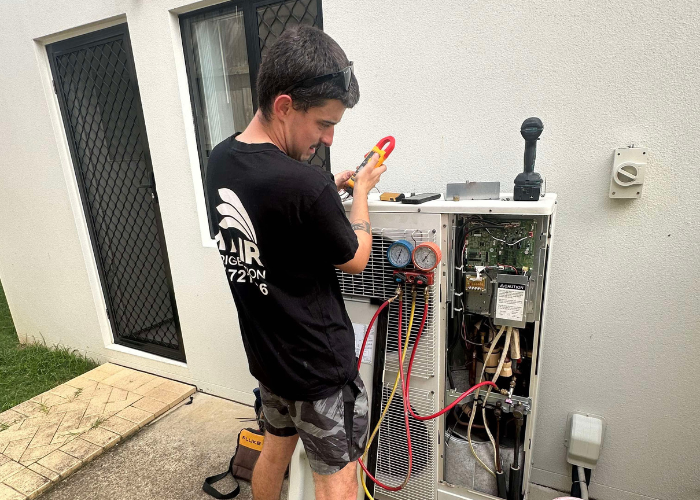
The gap between adequate and exceptional air conditioning performance hinges largely on installation quality—a reality that becomes painfully apparent during Brisbane’s peak summer months when undersized or poorly installed systems struggle under demand. Professional air conditioning installation encompasses far more than mounting units and connecting refrigerant lines; it requires comprehensive load calculations, strategic placement decisions, and meticulous attention to electrical and drainage requirements.
Load calculations determine appropriate system sizing by accounting for room dimensions, insulation quality, window orientation, and Brisbane’s specific climate data. Undersized systems run continuously without achieving desired temperatures, driving energy consumption while delivering inadequate comfort. Oversized systems cycle frequently, failing to properly dehumidify and wearing components prematurely. These sizing errors persist for the system’s entire lifespan, making initial calculation accuracy crucial.
Placement decisions profoundly impact both performance and longevity. Outdoor compressor units positioned in direct afternoon sun work harder and age faster than units installed in shaded locations with adequate airflow. Indoor unit placement must account for furniture layouts, airflow patterns, and drainage accessibility—considerations that separate experienced installers from those simply following manufacturer minimums. JM Air & Refrigeration’s familiarity with Brisbane’s building styles and common architectural configurations enables installation approaches that optimise both immediate performance and long-term reliability.
Electrical infrastructure often requires upgrading to support modern air conditioning systems, particularly in older Brisbane homes built before air conditioning became standard. Inadequate electrical supply creates safety risks and system performance issues that surface immediately or develop insidiously over time. Professional installers assess existing electrical capacity, implement necessary upgrades, and ensure installations comply with current safety standards—protection that disappears when homeowners prioritise lowest-quote installation over qualified expertise.
Making Your Air Conditioning Decision in Brisbane’s Context
The choice between split system and ducted air conditioning ultimately reflects your property’s characteristics, your budget parameters, and your cooling priorities. Brisbane homeowners renovating character homes often find split systems provide optimal value, delivering excellent comfort in primary spaces without the structural compromises ducted installation might demand. Conversely, new home construction or comprehensive renovations create ideal opportunities for ducted systems, where installation costs integrate into broader project budgets and design flexibility remains maximum.
Budget considerations extend beyond purchase and installation to encompass operational costs over the system’s lifespan. Brisbane’s extended cooling season means efficiency differences compound year after year, making energy ratings and zoning capabilities valuable selection criteria rather than peripheral features. A moderately more expensive system that reduces energy consumption by fifteen percent recovers its premium within several Brisbane summers while delivering superior comfort throughout.
The most strategic approach involves consultation with experienced professionals who understand Brisbane’s specific requirements rather than attempting to translate generic advice into local application. What works in Melbourne’s dry heat or Sydney’s coastal conditions may prove suboptimal under Brisbane’s humidity and extended summer duration. Local expertise—understanding how systems perform in Queenslander homes versus contemporary builds, recognising when ceiling heights demand modified approaches, and knowing which brands withstand Brisbane’s climate most reliably—transforms air conditioning decisions from overwhelming complexity into confident choices backed by relevant experience.
Whether you ultimately choose split system flexibility or ducted comprehensiveness, prioritising quality installation and appropriate sizing ensures your air conditioning investment delivers reliable comfort throughout Brisbane’s demanding climate for years ahead. For businesses seeking climate control solutions, commercial air conditioning options address the unique demands of retail spaces, offices, and industrial facilities across Brisbane.
Ready to discuss your air conditioning needs? Contact JM Air & Refrigeration today for expert advice tailored to your Brisbane property.